When winter arrives in Chicagoland, your boiler becomes one of the hardest-working systems in your home. Many older homes in the area still rely on boilers to provide heat, which can be extremely reliable, but only when they’re properly maintained.
It is a common misconception that boilers are dangerous, but like any heating system that involves pressure, heat, and fuel combustion, they can potentially become dangerous when repairs are skipped and maintenance is overlooked.
How a Boiler System Works: The Simple Version
A residential boiler heats water, or creates steam, using gas or another fuel source. That heat is distributed through radiators, baseboard heaters, or radiant floor systems to warm your home. Unlike forced-air central heating systems that use ducts to move warm air, boilers rely on hot water or steam circulating through pipes, which means pressure control and water temperature play a much bigger role in overall boiler safety.
Boilers rely on:
- Controlled pressure
- Proper ventilation
- Safe fuel combustion
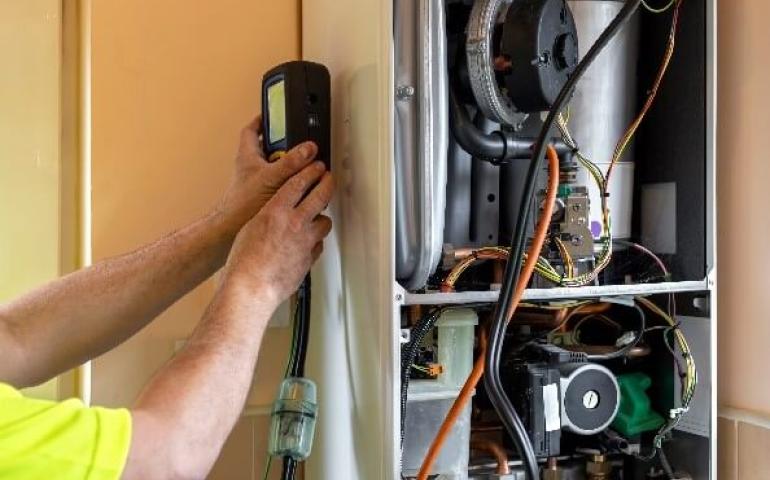
Routine inspections and maintenance are critical for boiler safety. Even small problems, like a blocked vent or faulty pressure valve, may become more serious if neglected.
Top Boiler Safety Tips Every Homeowner Should Know
Ensure Proper Ventilation & Combustion
Your boiler has to vent exhaust gases to keep your home safe. A blocked flue, damaged vent pipes, or chimney issues could create dangerous carbon monoxide buildup.
During a maintenance appointment, your vents and combustion components are inspected to ensure your boiler is operating safely.
Monitor Boiler Pressure & Temperature
Most boilers come equipped with a pressure gauge that should stay within the manufacturer’s recommended range. Pressure that’s too high or too low can be a sign of underlying boiler issues.
If you notice unusual pressure readings, it is always better to contact a professional instead of attempting to troubleshoot the system yourself.
Watch for Leaks, Corrosion & Odd Sounds
Leaks, rust, hissing sounds, or banging noises are not normal. These are some of the first warnings of worn-out parts or pressure issues.
Catching these boiler issues early helps prevent unsafe conditions, expensive repairs, or early system replacements.
Bleed Radiators When Needed
Air trapped in a hydronic system can make your boiler less efficient and cause pressure fluctuations. It needs to be released regularly. While you can bleed radiators yourself, internal boiler adjustments should always be left to licensed technicians.
Schedule Annual Professional Maintenance
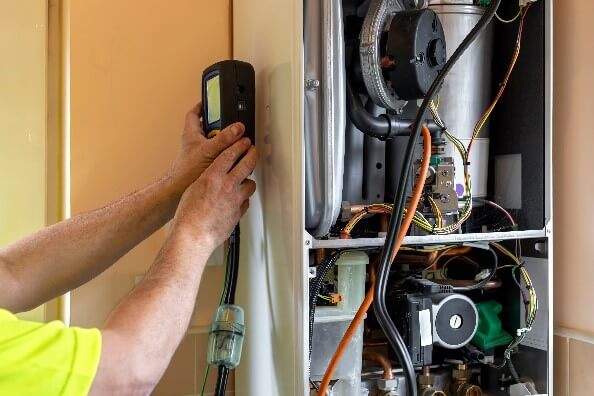
Getting annual boiler maintenance before heating season starts is a big part of ensuring your boiler is operating safely. A professional inspection checks safety controls, pressure relief valves, burners, and venting to ensure everything is operating correctly.
Preventive care is one of the best ways to avoid unexpected breakdowns or safety concerns.
Install & Maintain Carbon Monoxide Detectors
Carbon monoxide detectors are a necessary precaution for homes with boiler systems. They should be placed near bedrooms and close to where your boiler is located. It’s important to test them monthly and replace the batteries regularly.
If your detector goes off or you smell gas, you should evacuate your home immediately and contact your gas company and an HVAC professional.
Consider Your Boiler’s Age & Fuel Type
Boilers that are older, especially those 10 to 15 or more years old, may not have the updated safety features. Newer boiler systems are designed with improved efficiency, better controls, and advanced safety technology.
If your boiler is nearing the end of its lifespan, it may be time to look into a system replacement.
Signs You Should Call a Professional Right Away
Some boiler problems are serious and shouldn’t be put off. Contact a professional, like Service Express, immediately if you notice:
- The boiler won’t turn on or keeps shutting off
- Strong gas smells or burning odors
- Visible water leaks or sudden pressure drops
- Yellow or orange flames instead of blue
- Loud banging, vibrating, or whistling sounds
Service Express provides 24/7 emergency service, so help is always available if safety is a concern.
A Boiler Safety Checklist for Homeowners
- Test carbon monoxide detectors monthly
- Visually inspect the boiler and piping regularly
- Listen for new or unusual noises
- Monitor pressure and temperature readings
- Bleed radiators if applicable
- Keep the boiler area clean and unobstructed
- Schedule annual professional maintenance
- Evaluate upgrade options for older systems
Save or print this checklist to help you stay ahead of potential boiler issues.
Stay Safe with Help from Service Express
Boiler safety starts with awareness and proper care. Understanding how your boiler works and knowing what’s normal and what isn’t can help you feel more confident throughout the heating season.
Taking a proactive approach to boiler safety helps protect both your home and your peace of mind. Having a trusted professional on your side matters when it comes to keeping your home safe from potential carbon monoxide issues or fire hazards. If something doesn’t seem quite right with your boiler, knowing Service Express is just a call away means your issue will be resolved quickly and safely.