
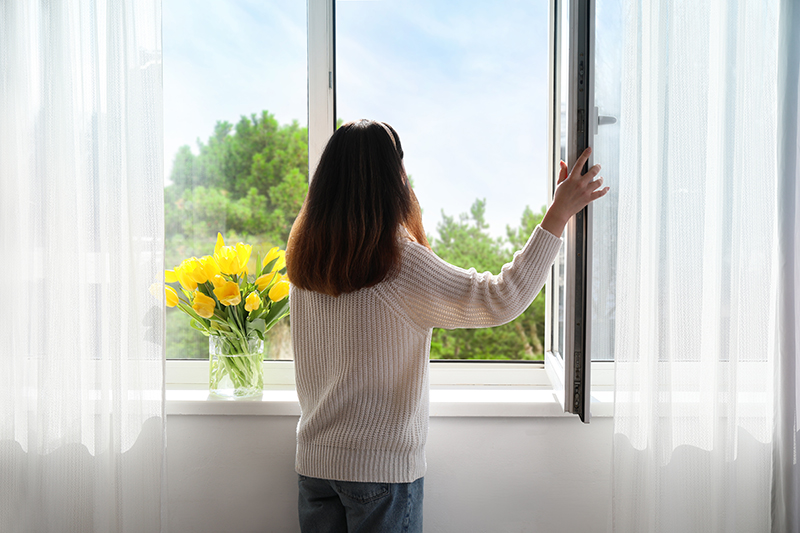
Updated 8/3/2026 – Airing out your house can seem like an easy way to refresh your space, and many people open their windows when their home feels stuffy or stale, but is it good to open windows to improve the air quality in your home?
Whether or not to open your windows depends on the conditions inside and outside your home. Open windows can be beneficial as far as improving ventilation, but it can also introduce other factors and pollutants which can make the air you’re breathing worse instead of being the easy air quality solution you’re looking for.
What Does Indoor Air Quality Actually Mean?
Your indoor air quality is more than just how a room smells or feels. The air inside your home can be affected by contaminates like dust, pet dander, pollen, mold spores, and other pollutants. The humidity and level of airflow also play an important role in how clean the air in your home is because those specific elements can leave your home feeling stale or even smelling musty or damp.
Having good indoor air quality requires balancing and managing indoor contaminants and moisture levels while periodically bringing in fresh air.
Do Open Windows Actually Improve Indoor Air Quality?
Opening your windows naturally increases ventilation throughout your home and temporarily refreshes it by cycling new air in. However, while it allows more air to circulate, outdoor air is not necessarily cleaner than indoor air.
Whether or not you should open your windows depends on several factors, including:
- Outdoor air quality
- Weather conditions
- Humidity levels
- Seasonal allergens
- Your home’s existing air quality concerns
Opening your windows when it’s cool outside or the weather is mild can help improve airflow so your home feels fresher. Conversely, keeping your windows open when there is excessive pollen or high humidity can cause new air quality issues.
If you’re trying to compare opening your windows versus using an air purifier, they serve different purposes. Open windows are good for ventilation, but they don’t clean the air that’s coming in. Air purifiers and HVAC filters catch airborne particles which makes the air in your home actually cleaner.
When Opening Windows Helps and Hurts Indoor Air Quality
Having your windows open is something that should be done situationally. You can take advantage of the stretches of mild weather we get in this area like cool spring mornings or temperate fall afternoons to air out your house. When the weather is nice, opening your windows can refresh rooms that feel stale and allow air to circulate naturally.
If you’re trying to figure out how to get fresh air into your house but opening your windows causes your home to feel more humid, dusty, or uncomfortable, then it won’t have a positive effect on your indoor air quality. Rather than relying solely only on open windows for better air in your home, your HVAC system can help manage your indoor air quality through better filtration, increased ventilation, and humidity control. This way you can maintain your air quality even when the outdoor conditions are not ideal for open windows.
What You Can Do If Opening Windows Isn’t Enough
Because outdoor conditions are constantly changing, natural ventilation isn’t enough to consistently manage airborne particles, humidity, or indoor pollutants. While opening your windows can be a helpful way to bring fresh air into your home, it is an IAQ misconception that that alone can improve the air quality in your home. It is only one piece of the puzzle when it comes to maintaining good indoor air quality.
If you’ve been dealing with poor indoor air quality, your HVAC system can be updated with upgraded filtration, mechanical ventilation, and whole home dehumidifiers or air purifiers to better circulate and filter the air in your home.
Instead of relying on the weather in order for your home to have cleaner air, upgrading your HVAC system and making sure it’s designed to improve the air you’re breathing will give you better indoor comfort.
Signs Your Home May Have IAQ Issues
Opening the windows might give you some temporary respite and make it seem like you’re breathing cleaner air, but it doesn’t help serious indoor air quality problems. These issues can have several different causes and an inspection by an HVAC professional can determine the exact cause and best solution to get you cleaner air in your home.
Common signs your home may need IAQ improvements include:
- Excessive dust buildup
- Stale or musty odors that always come back
- Rooms that consistently feel stuffy
- Uneven humidity levels
- Increased allergy symptoms when indoors
- Poor airflow
- Condensation or moisture concerns
When to Contact an HVAC Professional About Your Indoor Air Quality
If your home continues to feel uncomfortable despite changing filters, cleaning regularly, or improving airflow, an HVAC professional can help identify potential causes. They can help you find indoor air quality solutions that fit your home’s specific needs.
A professional evaluation can help determine if your home would benefit from:
- Improved filtration
- Better ventilation
- Humidity control
- Air purification solutions
- HVAC maintenance or adjustments
Find the Right Balance Between Fresh Air and Indoor Comfort
Indoor air quality isn’t determined by a single habit, it’s shaped by everyday habits and the choices you make. While opening a window can give your home a quick refresh, it is not a lasting improvement.
The important thing to note is how your environment influences the air in your house and how to pick the right ventilation and air filtration method based on the season and the type of weather we get in Chicagoland.
If you’re trying to just get some fresh air in your home, then opening your windows periodically will help, but if your house is always humid, stuffy, and dusty regardless of whether your windows are open or closed, you might have a bigger problem that an HVAC professional should evaluate and recommend solutions based on their findings that will give you a healthier, more comfortable living environment regardless of the weather outside.