
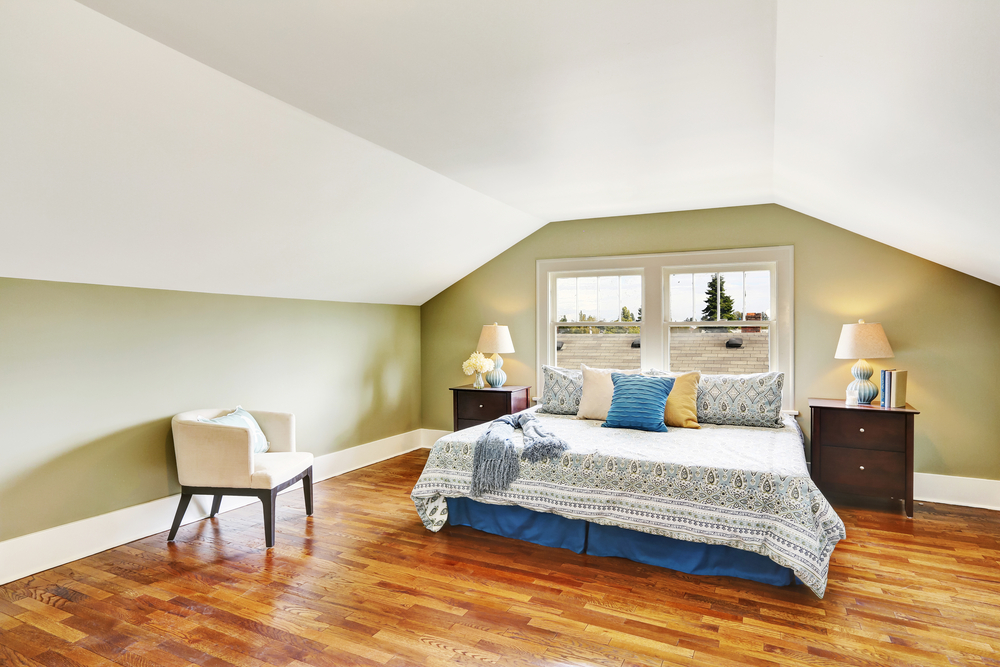
Uneven heating and cooling are common issues for homeowners across Chicagoland. As the seasons change and the weather warms up, you might notice that the upstairs of your home feels noticeably warmer than the downstairs.
When it’s finally time to turn on your AC, the lower level cools down fine, but the upstairs still feels stuffy and uncomfortable. This doesn’t automatically mean there’s something wrong with your air conditioner, there might be another explanation as to why your upstairs is so hot.
Why Upstairs Rooms Get Hotter in Illinois Homes
It’s natural for your upstairs rooms to get warmer than the lower levels because heat naturally rises. On top of that, your roof and attic absorb a large amount of heat during the day and transfer it into second-floor rooms.
In the summer, that heat load can be significant. Higher humidity during the summer means the upstairs tends to feel warmer and more uncomfortable, even if the temperature difference isn’t extreme. In many older Chicagoland homes, the level and type of insulation and ductwork weren’t designed for today’s cooling demands, which exacerbates the issue.
Common Reasons Your Upstairs Is Hotter Than Downstairs
Poor Airflow to the Second Floor
If there’s not enough cool air reaching the upstairs rooms, the temperatures will naturally be higher than the rest of your home. This can be due to blocked vents, dirty filters, or furniture covering registers. The decreased airflow might also be due to the AC’s blower motor not pushing air evenly throughout your home.
Ductwork Problems
Your duct system is a big part of how evenly your home cools. If the air ducts are leaking, poorly insulated, or not properly balanced, the upstairs often gets less conditioned air than the rest of the house. Because upper-floor ducts are usually longer, the air has to travel farther to cool the upstairs, so the ducts can lose more efficiency along the way.
Inadequate Attic Insulation
A poorly insulated attic will become a heat source right above the rooms on your upstairs floor. When there is little to no insulation between the ceilings of the upstairs rooms and the attic, heat from the attic seeps into the rooms, making it harder for your AC to cool them. This excess heat not only makes your home warmer but can also cause roof and structural damage.
Air Leaks Around Windows and Doors
The rooms on the upper floor usually receive more direct sunlight and have more exterior wall exposure. Because of this, there is a higher risk of small air leaks around windows, doors, or recessed lighting letting warm outdoor air into your home. Your air conditioner might not be able to combat the higher temperatures on your upstairs floor from warm air leaking in.
Improperly Placed Thermostat
In many homes, the thermostat is located on the first floor. That means the downstairs reaches the set temperature faster. The temperature your thermostat is set to might not reflect the temperature of your upper floor, which means your AC might shut off before the upstairs is fully cooled. This leaves your upstairs warmer than the rest of your home.
Wrong Size or Aging AC System
An air conditioner nearing the end of its life can make uneven cooling more noticeable. The same goes for a system that’s the wrong size. An undersized system may run constantly without ever fully cooling the second floor, while an oversized system will cool the lower floors of your home too quickly and shut off before enough air reaches the upstairs rooms.
Why Is Only One Upstairs Room Hot?
If only one room is warmer than the rest of the house, it likely has to do with that room specifically, not with your HVAC system. For example, a bedroom at the end of the duct run may receive less airflow than rooms closer to the air handler. Always closing the door to a specific room can also trap warm air inside
The area of your home and type of room it is can also have an impact. Rooms above garages often stay hotter because garages are typically not climate-controlled. Finished attics and bonus rooms may also heat up faster because they have more roof exposure. Rooms with large west-facing windows receive more afternoon sun than the rest of the house, making them feel noticeably warmer even when the AC is running.
How to Tell if It’s a Simple Fix or a Bigger Problem
Try These Simple Fixes First
A few simple tweaks might help cool your upstairs during summertime.
- Open all upstairs supply and return vents
- Move furniture, rugs, or curtains that are blocking vents
- Replace a dirty, clogged, or old air filter
- Set ceiling fans to spin counterclockwise in summer
- Close blinds or curtains during the hottest part of the day
- Keep interior doors open to improve circulation between rooms
Signs It May Be a More Complex HVAC Problem
These may be signs of a larger issue with your ductwork, insulation, or AC system.
- Upstairs is still warmer after proper HVAC maintenance and airflow improvements
- Airflow from the vents is too weak
- AC runs nonstop without effectively cooling the second level
- One or more rooms are consistently hotter than the rest of the house
- Increased energy bills without improved comfort
- The problem keeps getting worse every summer
Could Your Thermostat Be Part of the Problem?
Where your thermostat is located might not seem like a big deal, but it can have a real impact on your comfort. When the thermostat is downstairs, it may signal the system to shut off before the upstairs has fully cooled.
In situations like this, homeowners often feel like the AC is not cooling upstairs even though the system is technically working as intended. Solutions like zoning systems, remote temperature sensors, or getting a new thermostat can help balance temperatures throughout the home.
Long-Term Solutions for a Hot Upstairs
If uneven cooling during summer is a recurring issue, there are more permanent solutions that can improve your comfort during this time of year. They can also help during colder months if the upper level of your house doesn’t heat evenly.
Ductwork Modifications or Balancing
An HVAC technician can address airflow imbalances in your home by adjusting damper settings, repairing leaks, or modifying the ductwork so more cool air flows upstairs.
Improve Attic Insulation and Ventilation
Adding insulation to your attic helps block heat from entering your home, while improved attic ventilation ensures that excess heat can escape, reducing stress on your AC and keeping your upstairs comfortable.
Install a Zoned HVAC System
A zoned HVAC system separates your home into different areas, each with its own thermostat, so your upstairs will have its own temperature setting. Zoning is helpful for larger or two-story homes, where a single temperature setting does not keep your entire home comfortable.
Add a Ductless Mini-Split for the Second Floor
Installing a ductless mini-split provides additional cooling exactly where it is needed. These systems work well for specific areas like finished attics, bonus rooms, bedrooms above garages, or spaces that do not get enough airflow from the main HVAC system.
Upgrade Your Air Conditioner
Replacing your air conditioner may be the best long-term solution to any uneven cooling you’re experiencing. A new system that’s properly sized and more efficient can improve airflow, cool more evenly, and make it easier to keep the upstairs comfortable during hot Illinois summers.
When to Call an HVAC Professional
A second, or third, floor that never feels comfortable can make it harder to enjoy your home and put unnecessary strain on your cooling system as it tries and fails to cool your entire home evenly, but it can’t. If you have already tried basic fixes and still notice uneven temperatures, a professional assessment can help uncover the root cause and identify the most effective solution for your home.
The team at Service Express Heating & Air Conditioning can evaluate your airflow, ductwork, insulation, and AC system to help you achieve more consistent comfort throughout your home.